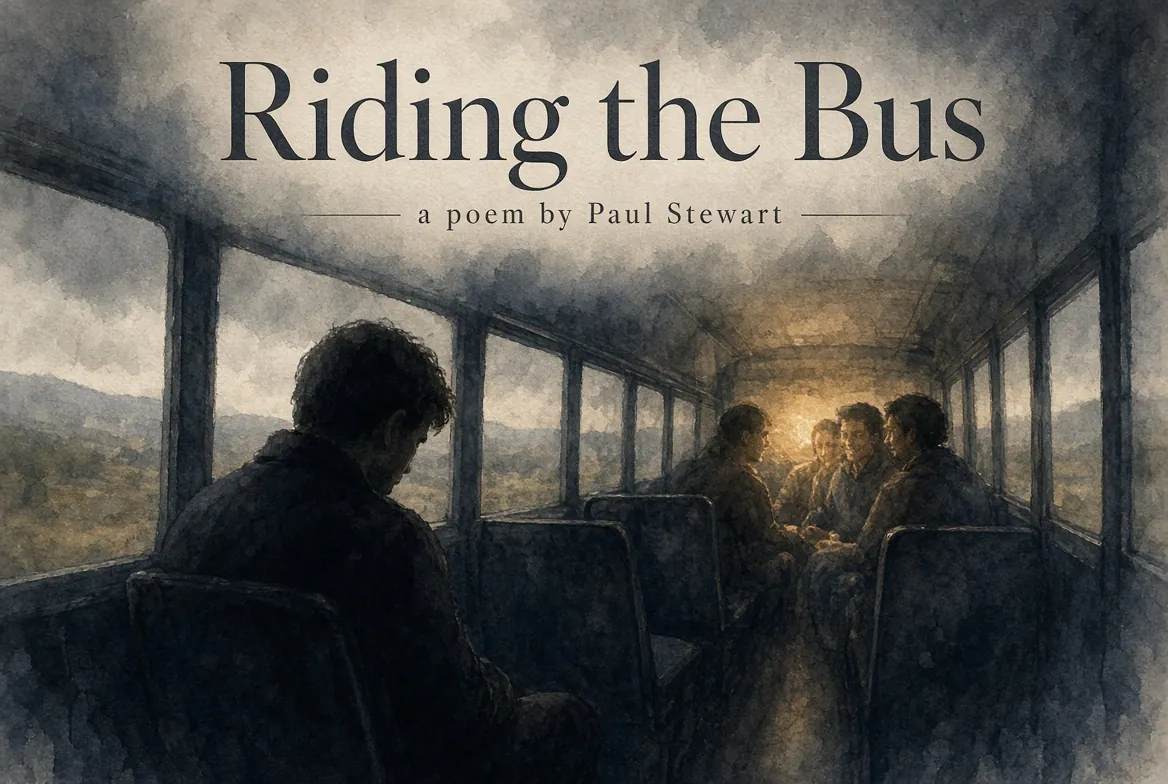
This is the path and he walks it alone. The fear doesn’t scream. It sits in the chest like a cold stone and reminds him each morning that no one else is on this road. He has people. They care the way people care when they don’t know what else to do. Words. Time. Help offered from outside a problem they cannot feel. They want to help. The distance is too wide. They cannot ride this bus with him. They cannot feel the seats shake or hear the engine that never quite turns off.
The fight used to be automatic. Get up. Keep moving. Pretend the grip was still firm. The energy for that is gone. Arms hang heavy. Will thins to almost nothing. So he sits. Watches the days pass. Feels the sickness advance in small, steady increments. And rides.
A bus that left the station long ago. No ticket. No destination. Just the slow roll through the same grey landscape. Passengers get on and off. Some talk. Some look concerned. Some offer directions that don’t match the route. The bus keeps moving. He stays in his seat. Window seat, mostly. Watching the world go by without being able to step off.
Some days the low, hollow weakness returns. Some days the sadness thickens until breathing feels like work. Some days the loneliness presses against the ribs. On those days the bus is colder, the seats harder, the road longer. He used to think someone would notice—the way he sat, the hands that shook for no reason, the questions he stopped answering, the light that left the eyes in photographs. Noticing and understanding are different. People see the outline and remain outside it. Kindness is real. Helplessness is real. The isolation stays intact.
The body fails in its quiet way. The mind is tired of arguing with itself. The future, if there is one, looks like more of the same. The belief that he could still change something flickers, fades, flickers again. The dominant feeling is simpler: the fight is over. Arms down. White flag already raised, even if no one else can see it.
So he rides. The bus asks nothing. Demands nothing. It continues. Stops come and go. Faces appear and disappear. The engine hums its low note. He stays in the seat, watching scenery that never quite changes, waiting for the moment the bus stops—not because he chose a destination, but because the road itself ran out. Not a crisis with sirens. Not a single collapse. Just the long, ordinary ride of a person getting sicker, growing sadder, losing the grip one small degree at a time, with neither the strength nor the company to do anything except stay on the bus until it stops.